
Why Your Website Is Your Most Important Marketing Asset in 2026
Your website is the centre of your digital marketing strategy and customer journey.
Every Google search, paid ad, social campaign, and email ends up in one place: your website. If it's slow, confusing, or doesn't convert, every dollar you spend on marketing is wasted.
The businesses winning online in 2026 understand this. Their websites aren't just digital brochures, they're the hub of their entire digital marketing operation, built to perform, convert, and scale. Here's what separates high-performing websites from expensive liabilities.
1. Your Website Needs to Work Like a Sales Machine

Most businesses treat their website like a business card. They shouldn't.
A properly built website is your best salesperson, available 24/7, answering questions, building trust, and moving prospects toward a decision. But only if it's designed that way.
High-performing website design starts with understanding how your customers make decisions. What questions do they have? What objections need addressing? What information moves them from consideration to action?
Your website needs to:
- Present your value proposition clearly and immediately
- Guide visitors through a logical path to conversion
- Remove friction at every step
- Build credibility through proof, not promises
- Integrate with your CRM and analytics so you can measure what matters
If your website can't do this, it's not a marketing asset, it's a liability.
2. Search Has Changed Your Website Strategy Needs to Catch Up
Google search looks nothing like it did three years ago. AI-generated answers, featured snippets, and changing user behaviour have fundamentally shifted how people find businesses online.
People now search through Google's AI overviews, ChatGPT, Perplexity, and other AI tools that pull information directly from websites. If your content isn't structured for these platforms, you're invisible.
This is where SEO strategy and website design overlap. Your site needs clear information architecture, well-structured content, and strong topical authority. FAQ sections, schema markup, and strategic internal linking aren't nice-to-haves anymore—they're requirements.
The businesses that show up in AI search results are the ones getting the leads. Everyone else is losing ground.
3. Mobile Is Where Your Customers Are

More than 70% of website traffic comes from mobile devices. Google indexes mobile versions of websites first. Yet most businesses still design for desktop and hope mobile "works."
That approach kills conversions.
Mobile-first design means building your website for the device most people use, then adapting for desktop. It means simple navigation, fast load times, thumb-friendly buttons, and removing anything that doesn't serve a purpose.
If a user lands on your site from a Google search while standing in line at the coffee shop, they should be able to understand what you do and take action in seconds. Not scroll through a cluttered desktop layout squeezed onto a phone screen.
Your mobile experience isn't secondary, it's your primary customer touchpoint.
4. Speed and Performance Directly Impact Revenue

Slow websites lose customers. Google has made this clear through Core Web Vitals and their ranking algorithm, but the real impact is simpler: people leave slow sites.
Every second of load time costs you conversions. A site that takes four seconds to load loses half its visitors before they see anything.
Technical performance includes:
- Fast server response times
- Optimised images and code
- Content delivery networks for global speed
- Clean, efficient development
- Strong security and regular updates
These aren't backend technical details, they're business performance metrics. Fast websites rank higher, convert better, and cost less to run.
5. Modern CMS Platforms Give You Control and Flexibility
The content management system powering your website determines how easy it is to update content, integrate tools, and scale as your business grows.
WordPress remains the most flexible option for most businesses. Its ecosystem of plugins, themes, and integrations means you're not locked into proprietary systems. You own your content, control your data, and can build exactly what your business needs.
But CMS selection depends on your specific requirements—security needs, integrations, team workflows, and long-term scalability. The wrong CMS locks you into expensive workarounds. The right one becomes the foundation of your digital growth.
6. Integration and Automation Turn Websites Into Growth Engines

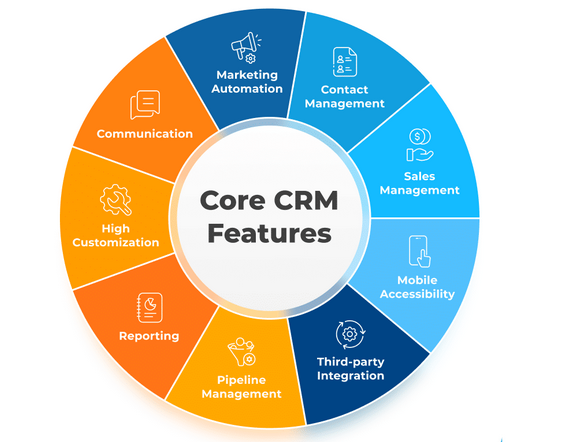
Your website shouldn't exist in isolation. It needs to connect with your CRM, marketing automation, analytics, and business systems.
When someone fills out a contact form, does it automatically create a lead record in your CRM? Route to the right salesperson? Trigger follow-up sequences? Provide data for attribution?
Modern websites integrate with:
- CRM platforms for lead management
- Marketing automation for nurture sequences
- Analytics for performance tracking
- Payment gateways for transactions
- Booking systems for appointments
These integrations turn your website from a static presence into an active part of your sales and marketing operation. They save time, improve lead quality, and give you visibility into what's actually working.
7. Building Websites That Actually Drive Growth
At Strike Media, we don't build websites that just look good. We build digital platforms that solve business problems and drive measurable growth.
Our website design and development process starts with understanding your business strategy, your customers, and your competitive landscape. We identify opportunities, build a roadmap, and create a website engineered for performance.
Whether you need a complete rebuild or strategic improvements to an existing site, the question is the same: is your website helping your business grow, or is it holding you back?
If you're serious about digital growth, let's talk about building a website that actually performs.